
The Science

ADVANCING NATURAL INTELLIGENCE:

A collaboration of Earth, Time, and Science.

Tens of millions of years ago, the North American landscape was home to towering rain forests with unparalleled biodiversity.

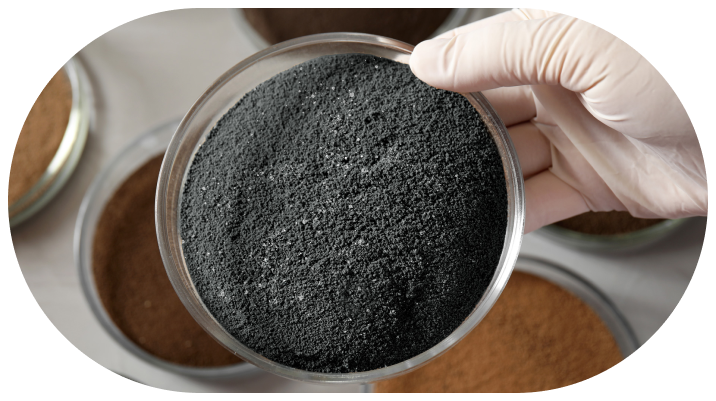
Chemistry, pressure, and time transformed this diverse biomass into many things. Among them – the soil humeome – a complex and diverse collection of natural molecules that has the potential to improve the human condition.

Enter: humeomics.

\ hyü-mē-ō-miks \

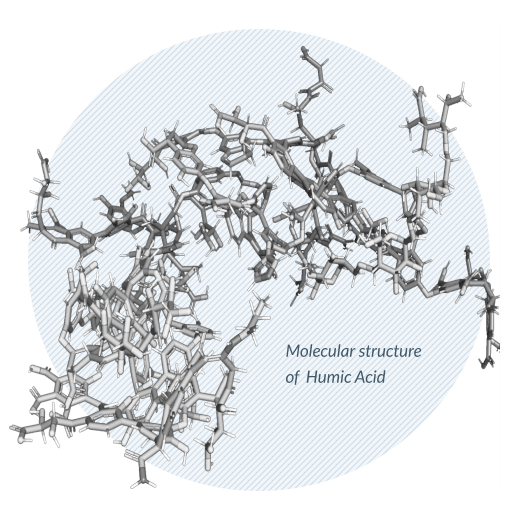
In the early years of this millennium, advances in the humeomic sciences allowed for a molecular mapping of the soil humeome.The findings recast the definition of humic acid and bridged ancient insight with scientific innovation.

Ayurvedic practitioners identified the ability of the soil humeome to support the human condition. Modern science unearthed its chemistry and its potential.Scaffolding among the three has been a remarkable journey of scientific discovery and collaboration.

BRILLIANT POTENTIAL, MAXIMIZED

The result? Support for life, millions of years in the making.

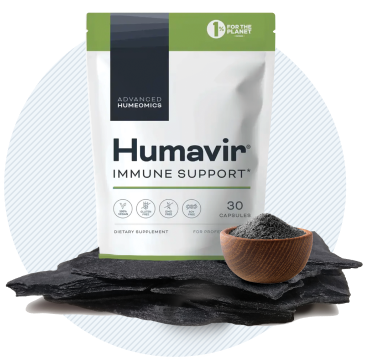
Humavir

Humavir’s specially formulated supplement supports healthy immune function, naturally.

Humavir® is a supplement based on the natural intelligence of humic acid — made smarter through science.

The molecule nature forged over millions of years adapts to immune systems in need of support and those in decline due to immune aging, while controlling inflammatory responses and oxidative stress at the cellular level.

Humavir’s multi-step purification process yields a humic acid molecule greater than 95% pure in independent third-party tests. Standard humic acid products are typically 30% pure. Achieving “best in class” purity unlocks Humavir’s immune support potential. Patented enhancements amplify the effect of humic acid in human clinical studies.

One molecule. Dynamic impact.

Formed from ancient plant matter, humic acid supports immune function and controls the inflammatory response, reducing oxidative stress.

Enhanced through purification.

Humavir starts with the highest quality raw material and subjects it to a multi-step purification process to unlock its immune support potential.

Advanced through biochemistry.

Patented enhancements increase Humavir’s efficacy as an immune support product in human clinical studies.

Sourced with care.

Humavir’s raw materials come from multiple locations in the United States that have been studied by geologists for over 20 years.

Humavir® is a supplement based on the natural intelligence of humic acid — made smarter through science.

The molecule nature forged over millions of years adapts to immune systems in need of support and those in decline due to immune aging, while controlling inflammatory responses and oxidative stress at the cellular level.

Humavir’s multi-step purification process yields a humic acid molecule greater than 95% pure in independent third-party tests. Standard humic acid products are typically 30% pure. Achieving “best in class” purity unlocks Humavir’s immune support potential. Patented enhancements amplify the effect of humic acid in human clinical studies.

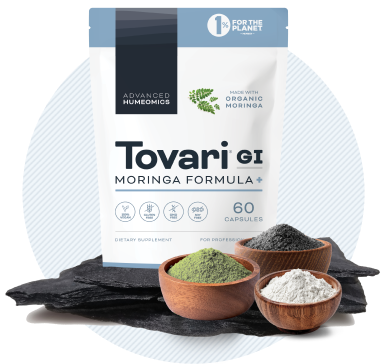
Tovari GI

Tovari GI’s formulation supports the gastrointestinal ecosystem.

Tovari GI scaffolds the functional benefits of humic acid and organic moringa with l-glutamine to support gut integrity, function, and overall gastrointestinal well-being. 

The use of an organic, cold-prepped moringa in Tovari GI fuses traditional Ayurvedic knowledge with modern scientific insight to promote the time-tested benefits of natural remedies, enhanced through science.

Macronutrients

Though macronutrients are primarily known for supporting cellular metabolism, they do far more than fuel the cell. They also modulate the body's inflammatory response, form the building blocks of cell membranes, and drive essential biological functions.

Phytonutrients

The phytonutrients in plants promote cellular health and well-being. Within this natural pharmacopeia, moringa stands out for its exceptionally diverse array of bioactive compounds.

Stability

Plant bioactive phytonutrients are often fragile and easily degradable. Moringa uses a natural preservation technique, glycosylation, to bind some phytonutrients to sugar molecules as an efficient workaround. The moringa bioactives that interest us the most thus remain intact, making it an exceptional active for Tovari GI.

Tovari GI harnesses the synergy of humic acid, moringa, and L-glutamine to create a comprehensive gastrointestinal support system. Tovari GI scaffolds the functional benefits of humic acid and organic moringa with l-glutamine to support gut integrity, function, and overall gastrointestinal well-being.

The use of an organic, cold-prepped moringa in Tovari GI fuses traditional Ayurvedic knowledge with modern scientific insight to promote the time-tested benefits of natural remedies, enhanced through science.

Physiology Concepts

The hallmark of a healthy immune system is an adaptive immune response that leverages humoral immunity and cell-mediated immunity to target pathogens (viruses and bacteria) and toxins.

Though the humoral and cell-mediated systems share fundamental features, their differences are what distinguish them. Humoral immunity depends on antibodies produced from B-cells working with T-cells. Cell-mediated immunity relies on the interaction of T cells, macrophage, and chemical signals from cytokines.

Attrition of the adaptive immune response with aging, and reliance on nonspecific immunity from the skin, mucosa and secretions to fill the gap, leaves older individuals more susceptible to infection, chronic inflammation, and cancer as they age.

Inflammaging” is sometimes used to describe a declining adaptive immune system and escalating chronic inflammation in older individuals.

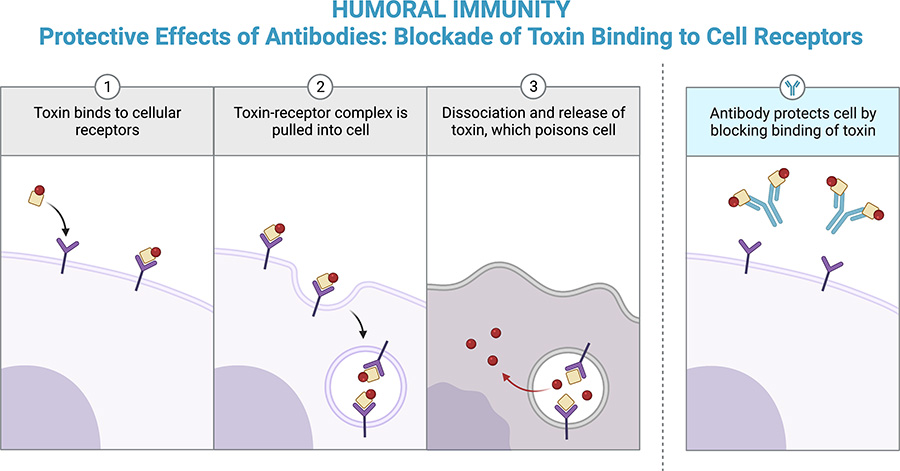
The graphic below illustrates the humoral immune response to an environmental toxin.

Reprinted from “Protected Effects of Antibodies: Blockage of Toxin Binding to Cell Receptors,” by BioRender.com (2022). Retrieved from https://app.biorender.com/biorender-template.

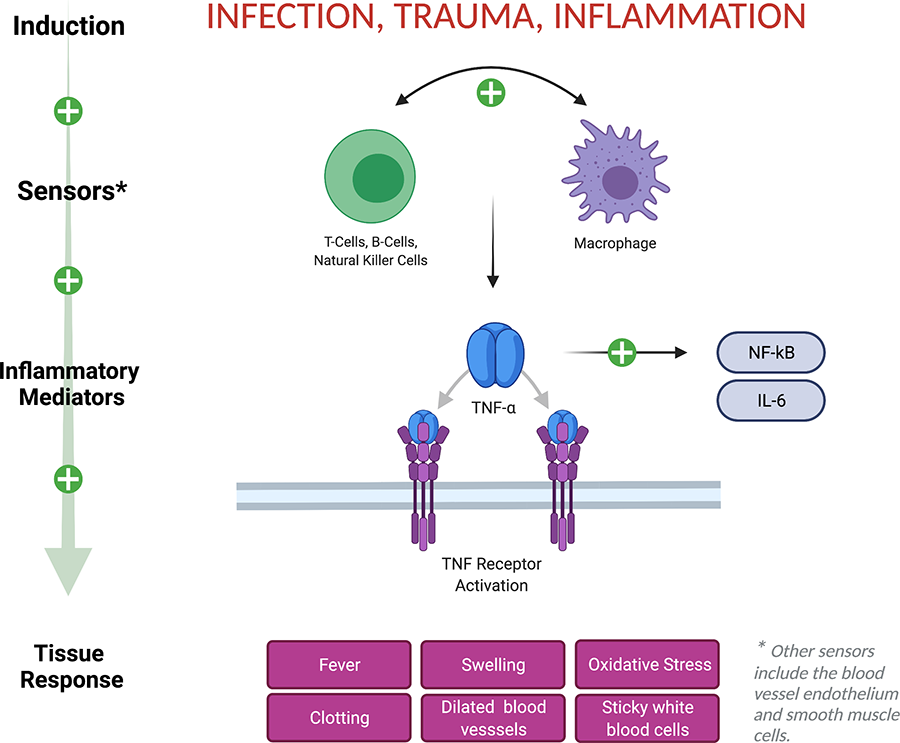
Inflammation is a cellular response to tissue damage and infection. Chemical signals released by sensor cells trigger a physical response, which we can experience as fever and swelling.

Tumor necrosis factor alpha (TNF-ɑ) is one of the of primary mediators of the inflammatory response, so the ability to influence it can have a positive impact on the inflammatory response.

The graphic below illustrates tumor necrosis factor alpha (TNF-ɑ) as an inflammatory mediator.

Side note: TNF-ɑ is part of the larger NF-κB pathway, which co-exists with two other inflammatory pathways, JAK-STAT and MAPK.

Created with BioRender.com.

Oxidative stress occurs when there is an imbalance between the body’s production of reactive oxygen species (also known as free radicals) and its antioxidant defenses.

Though the creation of reactive oxygen species is inevitable in living systems, the scales can be tipped in favor of their overproduction in the presence of nutritional deficiencies, environmental pollution, chronic inflammation, chronic infection, and small genomic changes (called polymorphisms) that favor oxidative stress.

Though an overabundance of free radicals damages cell membranes, vital cellular organelles including mitochondria, and DNA, our cells also use oxidative stress to neutralize foreign pathogens, such as bacteria, to keep our bodies healthy.

Preserving balance in the system is key to long-term health. Supporting micronutrient needs with nutrient dense fresh vegetables and fruit, reducing sources of chronic inflammation, and cleaning up our environment are all part of the solution.


Biochemistry: Tovari

Nrf2 System

1. Nrf2 is released in the cytoplasm and shuttled into the nucleus when oxidative stress is high in the cell.

2. Nrf2 activates the Antioxidant Response Element and promotes the transcription of Nrf2 regulated genes to make messenger RNA (mRNA), the cell’s template for making the proteins that are necessary for life.

3. mRNA is decoded in the cytoplasm by ribosomes.  This is the cellular touchpoint where amino acids combine to make a protein.

4. Activation of the Nrf2 pathway promotes the creation of proteins that support the cellular response to stress and inflammation plus metabolism and mitochondrial function.  Mitochondria transform food into energy for the cell.

NF-kB System

5.  Signaling chemicals bind onto the cell membrane receptor, when forces a change in the IKK Complex

6.  The modified IKK Complex turnkeys the activation of the NF-κB complex.

7.  Activated NF-κB moves into the nucleus of the cell to promote the transcription of NF-κB regulated genes.

8.  The byproducts of NF-κB activation promote the creation of cellular inflammatory proteins that help the cell respond to its environment and signal other cells to prepare their own response.

Created with BioRender.com

Introduction

  • The mucosal barrier in the gut includes an outer mucus layer in the small and large intestine. Embedded in this layer is the microbiome, which includes health-promoting commensal bacteria, viruses and fungi, as well as opportunistic species of each that may induce disease under the right conditions.
  • The inner mucus layer contains high levels of Immunoglobulin A, an important antibody in the gastrointestinal tract, as well as antimicrobial proteins that destroy harmful bacteria.
  • Epithelial cells manage the absorption of contents in the gut lumen through several active and passive mechanisms. Under healthy conditions, epithelial cells are tacked together by tight junction proteins.

Created with BioRender.com

Find answers to common questions.

Access information for medical professionals.