


IBS and leaky gut syndrome are often spoken about as though they are the same condition. They share bloating, abdominal pain, irregular stools, and the steady sense that something in the digestive system is no longer functioning quietly in the background. Yet they describe different things. Irritable bowel syndrome is a recognized clinical diagnosis. Leaky gut, more precisely, increased intestinal permeability, describes a measurable change in the gut barrier itself. Below, we walk through what separates them, where they overlap, and what is worth understanding before drawing conclusions about either.
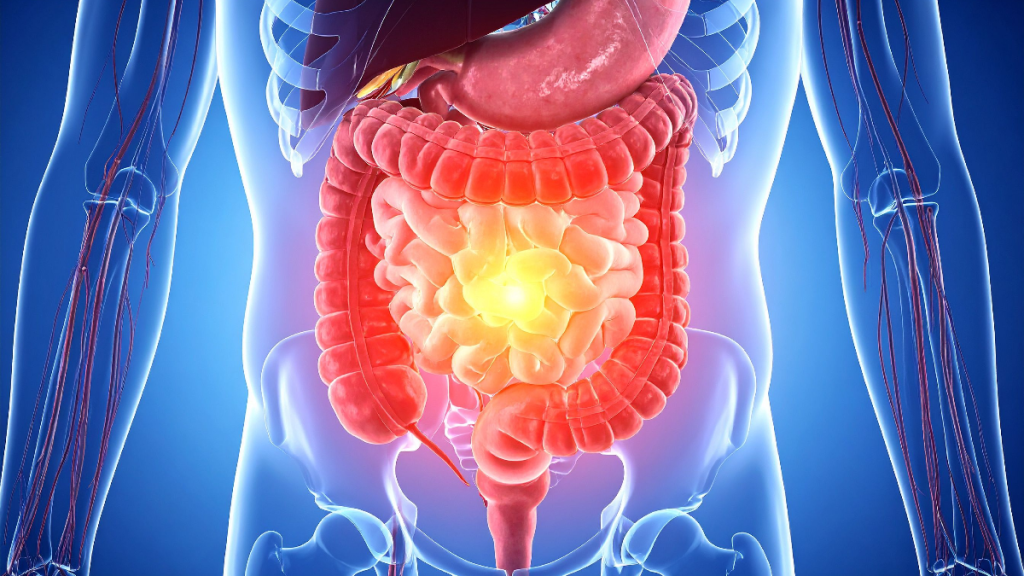
Irritable bowel syndrome is a functional disorder of the intestine, meaning the gut shows no structural disease, yet its function is disrupted. Symptoms include abdominal pain, bloat, and altered bowel habits — diarrhea, constipation, or alternating between them. IBS is diagnosed using the Rome IV symptom criteria, after other conditions have been ruled out. Researchers continue to investigate the mechanism behind it, with current evidence pointing to gut–brain signaling, visceral hypersensitivity, motility changes, and shifts in intestinal bacteria. IBS does not progress to structural disease, but it can meaningfully affect quality of life and nutrient absorption

Leaky gut syndrome is not a formal medical diagnosis. The phrase describes a state of increased intestinal permeability, in which the connections between cells of the intestinal lining loosen, allowing substances that would normally remain inside the gut to pass into surrounding tissue.
Both conditions involve the intestine and share symptoms, but they are not the same condition. That distinction matters because it shapes how each is understood and supported.
IBS is a recognized functional GI disorder, diagnosed using established Rome IV criteria after ruling out other diseases. Leaky gut describes a physiological state, increased intestinal permeability, that does not yet carry a formal medical classification and is largely assessed through specialized, research-grade testing.
Where IBS centers on gut-brain signaling, motility and visceral sensitivity, leaky gut involves structural compromise at the level of the intestinal lining itself, where weakened tight junctions allow substances to pass into surrounding tissue that would otherwise be kept out.
IBS tends to stay localized to the intestine. Leaky gut can produce systemic effects that extend well beyond it, showing up as fatigue, food sensitivities and signs that have little obvious connection to the gut at all.

Small intestinal bacterial overgrowth — SIBO — is often grouped with IBS and leaky gut, but it describes something specific. SIBO refers to an overpopulation of bacteria in the small intestine, where bacterial counts should be relatively low. It is identified by breath testing and produces symptoms that overlap with IBS, particularly bloating after meals rich in carbohydrates. SIBO can also contribute to barrier dysfunction, which is one reason these three conditions tend to appear together in clinical conversations, even though they describe different problems.
FODMAPs: fermentable oligosaccharides, disaccharides, monosaccharides, and polyols — are short-chain carbohydrates that draw water into the intestine and ferment quickly. In a sensitive gut, this fermentation produces gas, bloat, and abdominal pain. The low FODMAP diet has been widely studied in IBS and helps many people identify which foods amplify their symptoms. It is best used as a short-term diagnostic tool rather than a long-term way of eating. Reintroducing foods under clinical guidance helps preserve dietary diversity and the microbial community that depends on it.
Traditional diagnosis begins by ruling out structural disease. Endoscopy, stool studies, and blood work check for infection, inflammatory bowel disease, and celiac. If those come back clear, IBS is diagnosed using the Rome IV criteria, which focus on the pattern, location, and frequency of symptoms.
Functional medicine takes a complementary approach. Practitioners may evaluate the microbiome, markers of intestinal permeability, food sensitivities, and the gut–brain axis. Neither approach is complete on its own. Traditional methods identify disease; functional methods examine how the system is operating. A thoughtful evaluation often draws from both, and the most useful conversations are the ones that combine the two perspectives.

Care plans are most effective when they are individualized. Common elements include dietary adjustments — often a structured low FODMAP trial, fiber modification, or the removal of identified triggers. Stress regulation matters, given how closely the nervous system influences gut function. For IBS, clinicians may prescribe medications that address motility or visceral pain. For barrier integrity, the focus is on supporting the intestinal lining, the resident bacteria, and reducing overall inflammatory load. Sleep, hydration, and consistent meal timing play quieter but meaningful roles. Improvement is generally gradual; tracking changes across weeks is more informative than judging day to day.
Any of the above warrants prompt evaluation by a clinician.
IBS and leaky gut syndrome are related but distinct. IBS describes how the intestine behaves. Leaky gut describes the state of the barrier itself. Both respond to careful attention — to diet, to stress, to the microbial community in the gut, and to the integrity of the intestinal lining. Understanding the difference allows for clearer conversations with practitioners and more grounded decisions about what to try next.
Curious about how supporting the intestinal lining fits into a broader approach to gut health? Explore the research behind Advanced Humeomics, where soil-derived humic acid is studied for its role in helping maintain gut barrier function and immune system activity — grounded in the science of how the natural environment and the human gut quietly stay connected.
Drossman DA, Hasler WL. Rome IV — Functional GI Disorders: Disorders of Gut-Brain Interaction. Gastroenterology. 2016.
Camilleri M. Leaky gut: mechanisms, measurement and clinical implications in humans. Gut. 2019;68:1516–1526.
Bischoff SC, et al. Intestinal permeability — a new target for disease prevention and therapy. BMC Gastroenterology. 2014;14:189.
Pimentel M, et al. ACG Clinical Guideline: Small Intestinal Bacterial Overgrowth. American Journal of Gastroenterology. 2020;115:165–178.
Böhn L, et al. Diet low in FODMAPs reduces symptoms of irritable bowel syndrome as well as traditional dietary advice. Gastroenterology. 2015;149:1399–1407.
Lacy BE, et al. ACG Clinical Guideline: Management of Irritable Bowel Syndrome. American Journal of Gastroenterology. 2021;116:17–44.
